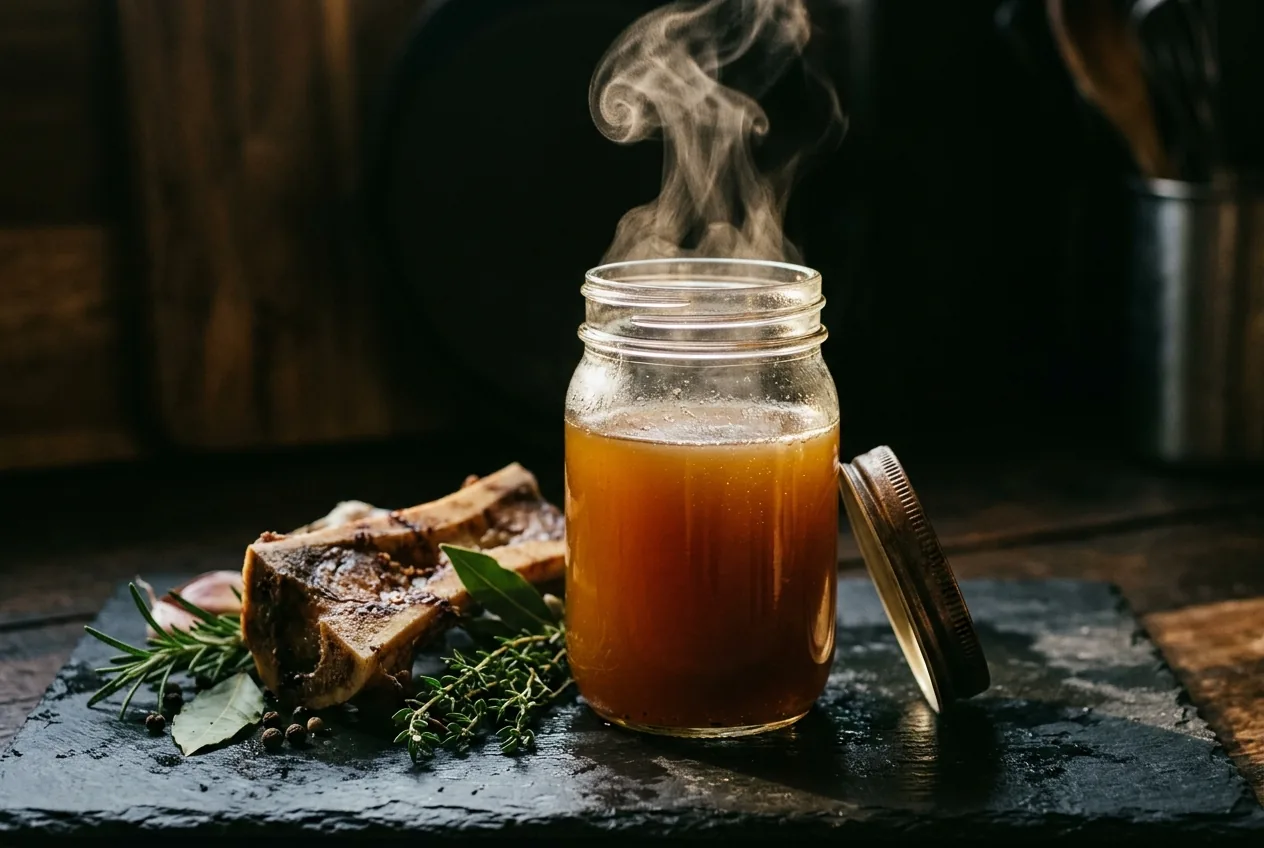
Bone broth, the lazy way.
Every carnivore kitchen runs on broth, and every broth recipe on the internet begins with a lie: "simply simmer for twelve hours." Simply! As though you weren't going to work, sleeping, or living a life. As though the hob were a pet you could leave home alone with the gas on.
Here's my confession: I haven't watched a broth in two years. The machine famous for silky vegetable soup turns out to be the best broth-sitter money can buy. Precise, low, steady temperature; a timer that thinks in hours; and a lid that never wanders off. I set it before bed. I wake to gold.
My method, such as it is
Roasted beef bones from the butcher — knuckles and marrow bones, the knobblier the better. Into the bowl with a splash of cider vinegar, a teaspoon of peppercorns, water to just below the max line. Then the slow-cook mode does what I refuse to: it stands there. Overnight, sometimes longer if the bones look like they have more to say.
Strain it in the morning and you get a broth that sets like something from a Victorian pantry — proper wobble, proper body. Salt it in the cup, not the pot, so every use starts neutral: drinking broth on cold mornings, the base for a beef-and-bone-marrow gravy, or the liquid I braise short ribs in when Sunday needs an occasion.
The economics amuse me most. The bones cost next to nothing — some butchers practically thank you for taking them. Out the other end comes the most nutrient-dense thing in my kitchen and a house that smells like a farmhouse with staff.
People at my demos are always surprised when I tell them this is the machine's real party trick. Not the fancy dinner. The staple that makes every other dinner better, done while you sleep. That's what "the kitchen working as hard as you do" actually means.